


Female Sexual Desire Disorder: Causes, Symptoms, & Treatment Options
Sexologist in Patna, Bihar for Female Sexual Disorder: Dr. Sunil Dubey
Is your female partner constantly struggling with her desire disorder? Due to her sexual health issue, both of you are facing difficulties in your intimate life. In fact, sometimes it becomes a relationship problem in your married life. Now, it's time to solve your sexual desire problem respectively. If you are looking for expert advice, personalized care, and comprehensive treatment approach in Patna, Bihar or online; Dubey Clinic can be your best choice for individual or couple sexual thearpy. Dr. Sunil Dubey is the leading ayurvedic sexologist in India who practices at this clinic and offers consulations for male and female sexual health concerns.
What is Female Sexual Desire Disorder?
Desire is an internal aspect of an individual that motivates or encourages them to take action to achieve a specific outcome. In the context of human sexuality, 'libido' plays a significant role; desire serves as the first stage of the sexual response cycle, prompting an individual to engage in sexual activity. 'Female Sexual Desire Disorder' is a common term used in the field of sexology. It refers to a condition in which a woman experiences difficulty in feeling sexual desire, leading to personal distress or problems within her relationships. Simply put, there is no need to be overly concerned about low sexual desire or a 'desire disorder'; it is important to understand that sexual desire varies from person to person and can also evolve throughout one's life.
If a problem related to sexual desire persists and begins to affect an individual's personal life, daily routine, or relationships, it becomes a cause for concern. The good news is that this is a medical condition of sexology for which treatment is available. Various factors—including physical, psychological, medical, or lifestyle-related issues—can be responsible for it. Dr. Sunil Dubey, a well-known Ayurvedacharya and accomplished sexologist based in Patna, Bihar, practices at 'Dubey Clinic.' Here, he provides consultations and treatments to both men and women regarding their sexual health concerns. He notes that 'sexual desire disorder'—a condition related to sexual desire—is a common issue that can affect the personal lives of both men and women. Since female sexual function is more complex than that of men, women are more likely to report such sexual health issues in their own lives. Let us understand the characteristics of this sexual disorder in women, so that appropriate steps can be taken to improve their sexual health.
Symptoms of Female Sexual Desire Disorder
In reality, women may experience a decline in sexual desire within their personal or marital lives. Depending on the nature of their libido and the complexities surrounding issues of desire, women may exhibit a variety of symptoms. In India, a significant number of people over the age of 40 struggle with this sexual issue, although it is a condition that anyone can face. 'Female Sexual Desire Disorder' (FSDD) is a condition characterized by a persistent or recurrent lack of sexual desire, which causes significant distress. In the field of sexology, this condition is commonly referred to as 'Hypoactive Sexual Desire Disorder' (HSDD). Overcoming such a condition requires specialized care and clinical support. Let us look at some common symptoms of this issue related to sexual health in women.
Reduced Sexual Interest: In cases of sexual dysfunction (FSDD) in women, there is very little or no interest in sexual activity. This is a persistent condition in which a lack of sexual desire acts as a barrier to initiating sexual relations. In most instances, it is extremely rare for a woman to feel any interest in engaging in sexual activity with her partner.
Decrease in Sexual Thoughts and Fantasies: In this situation, sexual thoughts or fantasies during sexual activity are either very infrequent or entirely absent. There is a diminished natural interest in sexual activity, even when the male partner is ready. The scarcity of thoughts regarding sexual intimacy further complicates this condition.
Reduced Response to Sexual Stimulation: When a partner initiates sexual activity, women often show very little interest. In such situations, the experience of sexual arousal in response to erotic cues is diminished. Women may find it difficult to develop sexual interest, whether at any sexual specific time or during intimate moments.
Decrease in Sexual Arousal: In the case of a sexual desire disorder, a woman experiences difficulty in becoming mentally sexually aroused. This involves a reduced level of arousal during sexual activity. Furthermore, her interest in engaging in or continuing sexual relations or sexual activity also diminishes. It is always important to understand that, in sexual activity, desire and arousal are two distinct things. It is possible for a woman to experience physical arousal without feeling sexual desire, or to feel sexual desire without an intense physical response.
Emotional and Psychological Symptoms: A decline in sexual desire can be a matter of distress and frustration for some women. Persistent concern regarding these changes in sexual interest significantly diminishes their sexual self-confidence and self-esteem. Some women may even experience feelings of guilt or a sense of personal inadequacy concerning their sexual expectations.
Impact on Relationships or Couple's Life: In the case of 'sexual desire disorder,' interest in physical intimacy with a partner diminishes, which can lead to conflicts or misunderstandings between them. As a result of these changes in physical intimacy, a woman may face issues related to her emotional well-being.
The symptoms mentioned above point toward a sexual desire disorder or low libido in women. It is important to note that, in women, these symptoms typically persist—often for a period of about 3 to 6 months—causing significant mental distress and impacting both their overall health and marital life. In such cases, seeking advice from a specialist can be helpful, as it allows for an evaluation of potential underlying factors, including medical conditions, the use of medications, mental health, relationship dynamics, and other possible causes.
Most important point for women-
Naturally, a decrease in sexual desire, a reduction in sexual activity, or the decision to abstain from sexual relations—none of these, in themselves, constitute 'sexual dysfunction.' Sexual desire in women can vary and may change due to factors such as age, stress, pregnancy, breastfeeding, menopause, or issues related to the menstrual cycle. This is why, rather than simply assuming it is a 'sexual desire disorder,' it is important to have your physical, medical, and mental health status evaluated.
Causes of Female Sexual Desire Disorder
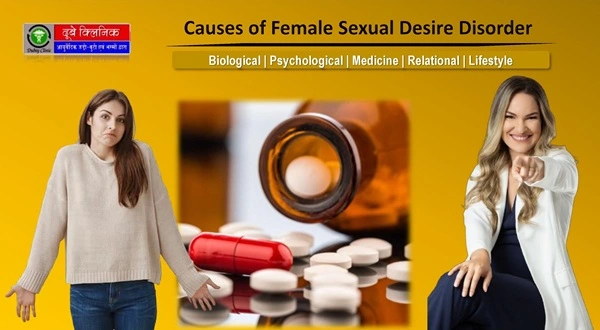
In reality, health and sexual function are deeply interconnected. 'Female Sexual Desire Disorder' refers to a persistent reduction or complete absence of sexual desire, which causes significant mental distress and can lead to other sexual health-related issues. This condition can stem from a variety of factors, including biological, psychological, relational, and social causes. Let us explore the potential reasons why a woman might experience a lack of sexual desire (low libido) or 'Hypoactive Sexual Desire Disorder.'
Biological and Hormonal Issues
Biological factors play a significant role in reducing sexual desire. Certain chronic illnesses—such as diabetes, cardiovascular diseases, neurological disorders, and persistent, long-term pain—can lead to a decrease in sexual desire. Beyond physical health issues, hormonal factors are a primary concern regarding libido. In women, estrogen levels often decline after menopause, which can lead to vaginal dryness and pain during intercourse—factors that indirectly diminish sexual desire. Various conditions—such as pregnancy, breastfeeding, and the physiological changes following childbirth—trigger hormonal shifts in women, which can also contribute to a reduced interest in sexual activity. Testosterone also influences sexual desire in women, though it is important to note that the relationship between hormone levels and libido is quite complex. Thyroid disorders, including both hypothyroidism and hyperthyroidism, can affect sexual function in women. Additionally, hyperprolactinemia (elevated levels of the hormone prolactin) can suppress reproductive hormones and decrease sexual interest.
Psychological Health Concerns
The most common cause of issues related to sexual desire in an individual is mental health concerns. Persistent anxiety and stress—stemming from work pressure, financial difficulties, or family responsibilities—can diminish a person's sexual desire. Depression affects one's overall well-being and can make it difficult to experience pleasure during sexual activity. Individuals with low self-esteem or a negative body image often feel uncomfortable with their own bodies, which can also impact their sexual desire. Past sexual trauma or abuse can profoundly affect an individual's capacity for sexual pleasure, their ability to trust, and their sexual desire. Some women may experience anxiety for pregnancy or harbour a fear of sexually transmitted diseases (STDs), both of which can lead to a reduced sexual desire.
Relationship-related Issues
Unresolved conflicts in a relationship or dissatisfaction with a partner's behavior can lead to a decrease in sexual desire among women. In such situations, a lack of emotional intimacy or trust hinders communication regarding sexual needs and preferences, which may result in a 'desire disorder' (a condition related to sexual desire). Furthermore, some women may experience issues with sexual desire due to their partner's sexual health concerns, such as erectile dysfunction or premature ejaculation.
Medication-related Factors
In some conditions, certain medications used for physical health conditions can reduce a person's sexual desire. Common examples—such as antidepressants, hormonal contraceptives, antipsychotic drugs, and medications for high blood pressure—may lead to a decrease in sexual desire. In such cases, one should not stop taking the medication without first consulting the prescribing physician.
Painful Conditions of Sexual Activity
Certain distressing conditions—such as vaginal dryness during sexual activity, pain during intercourse (dyspareunia), and pelvic floor muscle dysfunction—can reduce a woman's sexual desire (libido). Endometriosis and genitourinary issues associated with menopause (genitourinary syndrome) are also sexual health concerns that can significantly impact a woman's sexual desire. Typically, pain may lead to the avoidance of sexual activity, which can subsequently result in a decrease in sexual desire or any sexual activity.
Lifestyle and Social Health Concerns
Lifestyle always matters for health and overall well-being. The impact of a poor lifestyle is invariably slow and negative, manifesting as a weak and unbalanced way of living. Lack of quality sleep, fatigue, an excessive workload, responsibilities related to caring for others, heavy alcohol consumption, substance use, an uncomfortable environment for sexual activity, and cultural or restrictive beliefs—all of these can affect sexual capacity and desire.
Diagnosis and Treatment Options for FSDD
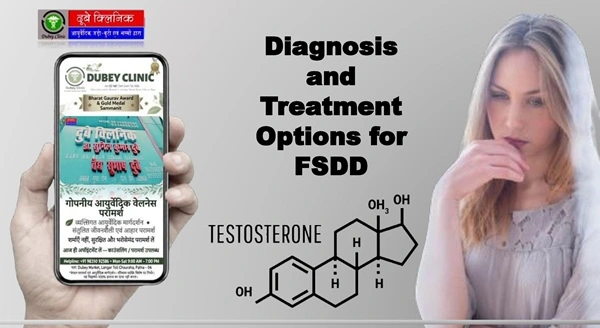
By now, we have gained an understanding of the symptoms and causes of 'Female Sexual Desire Disorder'—a condition related to sexual desire in women. It is a health issue concerning sexual and personal well-being that can persist over a long period. The assessment of this condition involves a thorough review of medical history, a psychological evaluation, an exploration of sexual history, and, where necessary, an investigation into other underlying health causes. Understanding that sexual concerns are highly private and sensitive health matters, individuals or couples are provided with specialized healthcare services, comfortable counseling, and ethical, professional care within a confidential clinical setting.
Dr. Sunil Dubey, the top sexologist in Bihar, states that individuals suffering from 'sexual desire disorder' require comprehensive sexual therapy. Ayurvedic treatments, when combined with a modern approach, offer to be highly effective in overcoming this issue. In fact, sexuality is a natural process, and sexual desire (libido) is an integral component of health and well-being. The Ayurvedic approach helps in balancing the doshas, improving vitality, addressing psychological health issues, and fostering emotional well-being, while the modern approach is useful for identifying biological and other underlying medical conditions.
Assessment of Medical and Sexual History-
In such a situation, a clinical sexologist provides a comfortable and supportive therapeutic environment to identify the root cause of the sexual health issue. During counseling sessions, they explore when the decline in sexual desire began, how long it has persisted, and the extent of its severity. This issue can manifest in various forms—for instance, it may have been present throughout one's life or developed later. They also assess whether it occurs universally or is limited to specific circumstances or particular relationships. Furthermore, they examine the frequency of sexual thoughts, fantasies, and engagement in sexual activities, as well as the level of psychological distress caused by these changes in sexual desire. Additionally, they investigate issues such as pain during intercourse, vaginal dryness, or difficulties in becoming aroused or reaching orgasm. They also review factors like menstrual history, pregnancy, breastfeeding, and menopausal status, as all of these can influence sexual desire (libido).
Psychological Assessment-
Specialist sexologists also assess mental health, as hormone levels and their fluctuations play a significant role in libido (sexual desire) or arousal. It is important to recognize that factors such as anxiety, depression, chronic stress, adrenal fatigue, past sexual trauma, identity-related issues, low self-esteem, performance pressure, relationship difficulties, and communication problems can all impact sexual health and libido.
Medical Examination-
During a physical examination, various symptoms or aspects of one's medical history may emerge, indicating that certain medical conditions are contributing to a reduced sexual desire. Hormonal imbalances or thyroid-related disorders can also lead to a low sex drive (libido). An examination of the genital or pelvic region may reveal the reasons behind pain or discomfort experienced during sexual activity. Furthermore, vaginal dryness or changes associated with menopause can also result in a decrease in sexual desire.
Lab Tests or Investigation-
Diagnosing HSDD based solely on testosterone levels is not sufficient. Various laboratory tests are conducted to confirm Female Sexual Desire Disorder. These include blood tests, which are used to screen for underlying physical, hormonal, or medical health issues. Through these tests, a sexologist can determine whether a thyroid disorder (related to TSH levels) is present. Additionally, prolactin levels are checked; elevated levels of this hormone can lead to a reduced sexual desire (low libido). Depending on the individual's symptoms, medical history, and the findings from a physical examination, further tests may also be performed.
Diagnosis or Treatment Criteria for FSDD
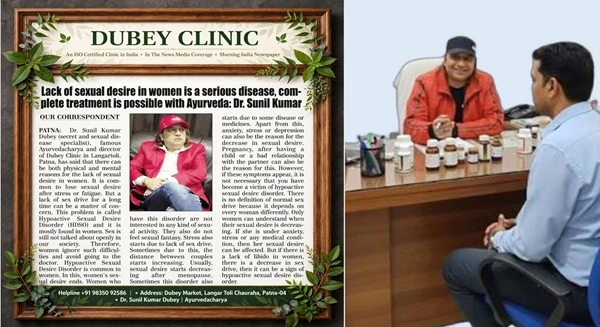
Dr. Sunil Dubey states that when symptoms persist and affect a woman's well-being, one should consider a diagnosis of 'Female Sexual Desire Disorder' and explore available treatment options. This becomes even more important when these symptoms are linked to other medical conditions, medications, significant relationship difficulties, or other contributing factors. He offers counseling and treatment services to women—or any individual—when symptoms of low libido persist for approximately 3–6 months, causing significant personal distress or problems within their relationships.
- Ayurvedic Approach (Vajikarana Therapy)
- Comprehensive Sexual Therapy (Educating)
- Behavior Therapy (CBT) for Stress or Depression
- Couple Counseling for Intimacy or Relationship Concern
- Relaxation Techniques for Stress Management
- Educating Patient in Sexual Function and Activity
- Modern Approach for Physical Health Concern
- Personalized and Integrated Ayurvedic Medicine
- Personalized Guidance for Lifestyle Modification
In his treatment, he offers personalized Ayurvedic solutions combined with a modern approach, taking into account an individual's physical constitution and the root causes of their issues. His comprehensive treatment for sexual problems—which incorporates medical, psychological, and counseling methods—is highly effective in resolving such concerns.
Why Choose Us
Trusted Ayurvedic Sexual Healthcare with Experience, Care & Confidentiality
At Ayurvedacharya Dr. Sunil Dubey – Dubey Clinic, Patna, we are committed to providing personalized, ethical, and confidential expert care for sexual health and wellness. Combining Ayurvedic principles with a modern, scientific approach, we strive to help individuals and couples understand their concerns and make informed decisions about their health. With a healthcare legacy dating back to 1965, our focus is on compassionate guidance, patient privacy, and treatment tailored to individual needs.
Why Patients Choose Us
Experienced Ayurvedic Sexologist & Healthcare Professionals
Benefit from Dr. Sunil Dubey’s professional qualifications and extensive experience in Ayurvedic sexology, sexual health counseling, and patient care. Dubey Clinic has a team of healthcare experts, including MBBS, MD, and PhD doctors, BAMS practitioners, and sexual therapists. They provide care under Dr. Dubey's supervision, employing a comprehensive treatment approach grounded in a scientific perspective.
Personalized Treatment Approach
Every individual has unique health concerns and his body constitution. We focus on understanding their symptoms, medical history, and lifestyle before discussing suitable care options. After the evaluation and examination of physical, psychological, and medical conditions; we offer them the personalized treatment that is based on their root-causes.
Confidential & Respectful Care
Your privacy and dignity always matter for us. We aim to provide a comfortable, non-judgmental environment where an individual can discuss his sensitive health concerns with confidence. There is a fully confidential and hassle-free clinical environment for every patient.
Ayurvedic Care with a Modern Perspective
Our approach combines Ayurvedic principles with contemporary medical understanding to support informed decisions about sexual and reproductive health. We take care of the patient’s overall health that’s why; our approach to provide effective treatment that helps to overcome their problems in an appropriate way.
Care for Men, Women & Couples
We offer consultations for a range of sexual health concerns, including erectile dysfunction, premature ejaculation, low libido, fertility-related concerns, and other intimate health issues. Our professional healthcare team unit is dedicated to every patient understanding their actual problems and making the right approach of personalized treatment plan.
Online & In-Clinic Consultations
Based in Patna, Bihar, Dubey Clinic offers in-person consultations and online consultation options for patients seeking guidance from different locations. Dr. Dubey always suggests the local people to visit the clinic first for their comprehensive and personalized treatment. Well, he and his team unit are always committed to help the major cities people through online, over phone, through WhatsApp, and digital presence. Dubey Clinic always provides them medicine delivery facility where they continue their treatment after consultation.
Your Health, Our Priority
We believe that every patient deserves to be heard, respected, and guided with care. Choose Dubey Clinic for a professional, private, and patient-focused approach to sexual health and well-being. Our professional care and expert advice will surely bring you the happiness in your individual or married life where sexual health concerns bother you.
Awards & Achiements



News Features




Our presence on the other online platform to know more about Best Sexologist in Patna, Bihar India
Our presence on the other online platform to know more about Best Sexologist in Patna, Bihar India
Our presence on the other online platform to know more about Best Sexologist in Patna, Bihar India
Our presence on the other online platform to know more about Best Sexologist in Patna, Bihar India
Our presence on the other online platform to know more about Best Sexologist in Patna, Bihar India
