


Female Infertility: Causes, Symptoms, Treatment Options in India
Female Infertility Treatment in Patna, Bihar | Dr. Sunil Dubey
If you are married and your female partner is experiencing reproductive health issues that make it difficult to conceive—leaving both of you feeling frustrated with your life—you may be searching for an effective and affordable solution. Do not worry; it is worth noting that infertility is a common issue in India, affecting approximately 14% of the population. The important point is that infertility can be treated, and Ayurvedic approaches play a significant role in addressing this condition. Typically, a comprehensive treatment process is adopted for such reproductive health challenges; this approach not only addresses the underlying health issues but also encourages individuals to improve their lifestyle habits during the course of treatment.
As a prominent Ayurvedic sexologist in India, the world-renowned Ayurvedacharya Dr. Sunil Dubey specializes in sexology care, sexual health services, sexual medicine, Ayurvedic treatments, counseling, and research. A licensed sexual health specialist, he is expertise and experienced in providing effective Ayurvedic treatments with modern approach for sexual issues affecting men and couples. In India, he offers personalized treatment—tailored to the specific needs of each individual—through his 'Dubey Clinic' as well as via online platforms. Dubey Clinic has a team of health specialists (MBBS, MD, PhD, BAMS, Counselor) dedicated to assisting those who require sexual therapy, counseling, or couples' therapy, all of which are customized to meet the unique needs of each person. Now, let us explore all the essential information regarding infertility in women—a reproductive health issue that requires specialized guidance for both men and women to address effectively.
What is Female Infertility?
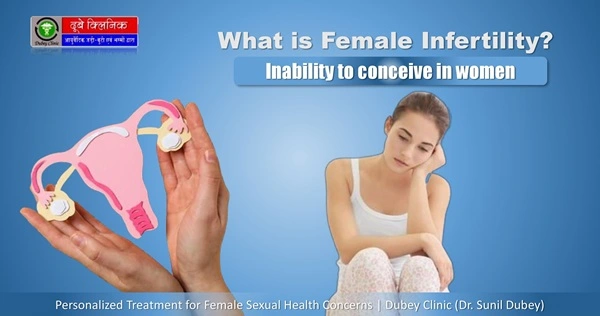
Infertility in women is a condition in which a woman experiences difficulty becoming pregnant, despite having regular sexual intercourse without the use of any protection. This reproductive health issue in women can be linked to problems involving ovulation, the fallopian tubes, the uterus, or other hormonal or reproductive health-related factors. If a woman is unable to conceive, it does not mean that she can never become pregnant. Many women facing such reproductive health issues can conceive through appropriate medical treatment and lifestyle changes.
Dr. Sunil Dubey states that if a married couple is struggling with infertility—regardless of whether the cause lies with the man or the woman—they should always recognize it as a medical condition rather than a personal failure. There is no reason for social stigma or mental distress in such a situation. Whenever a couple suspects that infertility is affecting their married life, they should seek advice from a sexual healthcare clinic or a specialist to find the best possible solution. Undergoing timely medical evaluations can help identify the underlying cause and facilitate the selection of the most appropriate and effective treatment. Let us explore the symptoms and causes of infertility in women in detail, so that patients can be better prepared to take prompt action regarding issues related to their sexual and reproductive health.
Symptoms of Female Infertility
Simply put, if one were to ask whether there is any definitive symptom of infertility in women, the answer would clearly be 'no'. This is because reproductive health issues do not affect sexual activity or performance, which is why many people remain unaware of such problems. In fact, the primary sign of infertility in women is difficulty conceiving, despite engaging in regular, unprotected sexual intercourse. However, some women may also exhibit other symptoms related to their reproductive or hormonal status.
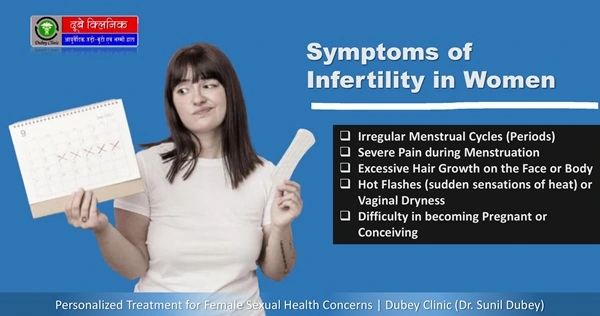
Here, we would like to know about all the signs or symptoms that some women experience during these conditions related to reproductive health.
- Irregular Menstrual Cycles (Periods): In women, the menstrual cycle is a clear indicator of ovulation. If the menstrual cycle is irregular, it can be a cause for concern regarding both sexual and reproductive health. Irregular periods, very light flow, or the absence of periods for several months can be signs of issues related to ovulation.
- Severe Pain during Menstruation or in the Pelvic Region: Severe pain during periods or persistent pain in the pelvic region can be a sign of endometriosis or other reproductive health issues. It is a long-term condition affecting women, in which tissue similar to the lining of the uterus begins to grow outside the uterus—for example, on the ovaries, fallopian tubes, or within the pelvic area. This can lead to pain, heavy menstrual bleeding, and, in some cases, difficulty in conceiving.
- Excessive Hair Growth on the Face or Body: Excess hair growth in women, persistent acne, or thinning of scalp hair can be signs of hormonal changes, such as those associated with Polycystic Ovary Syndrome (PCOS). In such situations, a range of hormonal imbalance—involving hormones such as progesterone, estrogen, FSH, LH, prolactin, and thyroid hormones—affects pregnancy in women.
- Hot Flashes (sudden sensations of heat) or Vaginal Dryness: These problems can be caused by a decline in estrogen levels or a premature decrease in ovarian function, which may affect fertility in women.
- Difficulty in becoming Pregnant or Conceiving: Generally, advancing age is a major factor affecting fertility or contributing to infertility. If a woman under the age of 35 is unable to conceive after trying for one year, it is a cause for concern. If a woman is between 35 and 40 years old and has not conceived after trying for 6 months, it is a matter of concern, and she should undergo a fertility evaluation. Women over the age of 40 should consult a doctor as soon as possible.
- Other Potential Symptoms: Several other symptoms may also be associated with infertility in women, such as the absence of menstrual periods (amenorrhea), excessively heavy menstrual bleeding, milk-like discharge from the nipples, or a history of pelvic inflammatory disease, endometriosis, or an ectopic pregnancy.
The symptoms mentioned above in women indicate that their health, in terms of reproduction, is not optimal. In such a situation, they should remain mindful of their health and, together with their partner, consider potential solutions. A medical solution is needed to determine the actual causes of women’s sexual health issues.
Causes of Female Infertility
We have already learned about the meaning of infertility in women and some of its potential symptoms; however, the scientific perspective, research, and modern approaches always focus specifically on the root causes of any health issue. In this context, female infertility refers to the inability to conceive despite having regular, unprotected sexual intercourse for one year. However, in certain specific circumstances, it is advisable to seek an evaluation for this reproductive health issue sooner. It can primarily stem from issues related to ovulation, the fallopian tubes, the uterus, hormonal imbalances, or age-related changes. There are several potential causes for female infertility, which are outlined below.
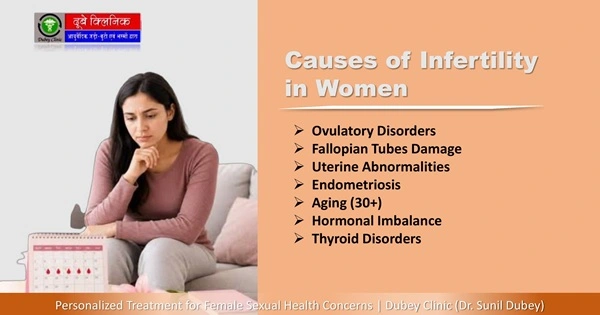
- Ovulatory Disorders: Ovulation is a natural process in which a mature egg is released from the ovary. For women, it is one of the most critical stages in the process of conception. Problems with ovulation are a major cause of female infertility, as they prevent the release of an egg from the ovary. Various health conditions—such as Polycystic Ovary Syndrome (PCOS), thyroid disorders, high prolactin levels, and premature ovarian insufficiency—can affect a woman's fertility.
- Fallopian Tubes Damage or Blockage: The fallopian tubes are two thin ducts that connect the area near each ovary to the uterus. For a woman to become pregnant, healthy fallopian tubes play a crucial role in her reproductive health. They facilitate processes such as ovulation, egg pickup, fertilization, the transport of the egg to the uterus, and implantation—all of which are essential for pregnancy. In some cases, if the fallopian tubes are blocked or damaged, sperm may be unable to reach the egg, or the movement of the egg may be obstructed. Conditions such as pelvic infections, prior pelvic surgery, endometriosis, or a history of an ectopic pregnancy can cause the fallopian tubes to become damaged or blocked.
- Uterine Abnormalities: The uterus is a hollow, muscular organ located in the female pelvis, where a baby develops during pregnancy. Its primary function is to facilitate menstruation, implantation, and pregnancy. Uterine abnormalities refer to variations in the shape, structure, or inner lining of the uterus. In some women, these are present from birth (congenital), while in others, they develop later in life. Certain uterine abnormalities can affect a woman's fertility, the process of implantation, or the course of a pregnancy. Common types of uterine abnormalities include a septate uterus, a bicornuate uterus, uterine fibroids, endometrial polyps, and intrauterine adhesions (Asherman’s syndrome).
- Endometriosis: Endometriosis is a condition in which tissue similar to the lining of the uterus begins to grow outside the uterus—most commonly on or around the ovaries, fallopian tubes, and pelvic tissues. This condition leads to inflammation, pain, and the formation of scar tissue in women. It is one of the most common causes of infertility among women worldwide. Approximately 1 in every 10 women of reproductive age faces this challenging condition. In cases of endometriosis, the condition affects a woman's ovaries, fallopian tubes, ovulation, and implantation.
- Aging (30+): Fertility declines with age in women because the number and quality of eggs decrease. This decline becomes even more pronounced from the mid-to-late 30s onwards.
Hormonal Imbalance: Hormones regulate ovulation and the menstrual cycle. Issues related to the thyroid, the pituitary gland, or prolactin can interfere with normal reproductive function in women can difficulties with conceiving.
- Other Contributing Factors: There are several other factors in women that contribute to this issue related to fertility or reproductive health. When it comes to lifestyle-related issues, some women are in habit of smoking and alcohol or engage in excessive exercise, while some women have sedentary lifestyle cause overweight. Certain sexually transmitted infections, such as chlamydia and gonorrhea, can damage the fallopian tubes in women. Medical treatments—including chemotherapy, radiation therapy, and certain types of surgery—can affect the functioning of the ovaries. Sometimes, even standard fertility tests fail to reveal a clear cause.
Diagnosis and Treatment Options for Female Infertility
Essentially, female infertility is a medical condition that requires comprehensive diagnostic and treatment facilities. Furthermore, during the course of treatment, it is important to modify unhealthy lifestyle habits and adopt a nutrient-rich diet. Based on the symptoms and causes of health issues associated with female infertility, we have come to understand that various factors can be responsible—such as ovulation disorders, hormonal imbalances, blocked fallopian tubes, uterine abnormalities, endometriosis, or changes in the quantity and quality of eggs that occur with age.
Dr. Sunil Dubey, a leading clinical sexologist in Patna at Dubey Clinic, states that the diagnosis and treatment of female infertility are based on the underlying causes, the woman's age, the duration of difficulties in conceiving, and the reproductive status of her male partner. In such cases, both the man and the woman require a proper diagnosis to identify their respective sexual and reproductive health issues. At this clinic, Dr. Dubey and his team of specialists provide comprehensive treatment to patients, employing a holistic approach that integrates Ayurveda, modern medical science, and personalized professional care. Let us know about the common diagnostic and treatment procedures for infertility in women.
Diagnosis of Female Infertility
The primary objective of the diagnosis is to identify the factors that are hindering conception in women, so that appropriate treatment and medications can be provided to them.
Medical History and Primary Examination
Sexual health specialists help patients analyze their medical history and, when necessary, recommend a physical examination. During a counseling session, the doctor might ask the patient—
- Regularity and duration of the menstrual cycle.
- History of previous pregnancies, miscarriages, or ectopic pregnancies (pregnancy outside the uterus).
- History of pelvic infections or sexually transmitted infections.
- Pelvic pain, endometriosis, or any prior surgery involving the reproductive organs.
- Medications, lifestyle factors, and a family history of early menopause.
Lab Tests (Hormone and Blood)
Essentially, blood tests are helpful in assessing reproductive function, identifying hormonal imbalances, and detecting other health-related issues. For this type of female infertility, sexologist doctor may advise patients to undergo lab tests—
- Follicle-Stimulating Hormone (FSH): When analyzed alongside other findings, it helps assess ovarian function in women.
- Anti-Müllerian Hormone (AMH): This is useful for estimating ovarian reserve, though it cannot precisely predict the likelihood of natural conception.
- Thyroid-Stimulating Hormone (TSH): This is used to screen for thyroid disorders in women.
- Prolactin: Typically tested when symptoms or menstrual irregularities suggest elevated levels.
- Progesterone: It can be measured at an appropriate time to assess whether ovulation has occurred.
Pelvic Ultrasound
During the diagnosis of female infertility, Sexual health specialists examine pelvic floor disorders and may recommend an ultrasound. A pelvic ultrasound (often performed transvaginal) helps in examining the uterus, ovaries, uterine lining, and ovarian follicles. It also aids in detecting conditions such as fibroids, ovarian cysts, and PCOS.
Fallopian Tube Examination
Sexual health specialists also examine the regulation and function of the fallopian tubes in women. Hysterosalpingography (HSG) is used to examine the condition of the fallopian tubes in women. It involves the use of a contrast dye and X-rays to determine whether the fallopian tubes are open and to assess the shape of the uterine cavity. Other tests may also be performed if necessary.
Additional Testing
- Hysteroscopy: This procedure is used to examine the inside of the uterus when an abnormality is suspected.
- Laparoscopy: This may be considered in specific cases—for instance, if conditions like endometriosis or pelvic adhesions (organs sticking to one another) are suspected; it is not routinely required for every patient.
- Male Semen Analysis: This involves examining the male partner’s sperm, as reproductive issues may involve either one or both partners.
Treatment Options for Female Infertility
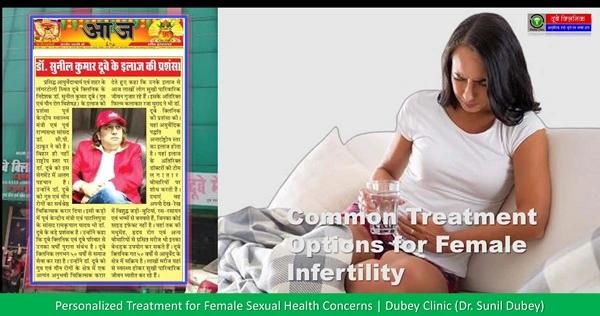
Once a diagnosis of infertility is made in a woman, a personalized treatment plan is determined for the patient. This approach takes into account the specific causes of her infertility, her age, the duration of the condition, and her individual care need. During the course of treatment, both the woman and her partner are provided with specific guidelines to follow. There are several treatment options available for female infertility in India, which are listed below.
Lifestyle Changes
- Advice for maintaining a healthy body weight.
- Suggestion for consuming a balanced and nutritious diet.
- Avoid smoking and the use of addictive substances.
- Limit or completely avoid alcohol consumption when trying to conceive.
- Before pregnancy, taking folic acid is good under healthcare guidance
Naturally, these measures support reproductive health, but they cannot resolve every cause of infertility.
Personalized Medication for Causes
- Ovulation-inducing medications
- PCOS or irregular ovulation
- Thyroid or prolactin disorders
Surgical Treatment (In structural abnormalities cases)
- Certain uterine fibroids or polyps.
- Adhesions (tissue sticking together) within the uterus.
- Certain cases of endometriosis.
- Specific abnormalities related to the fallopian tubes.
People should be aware that surgery is not necessary for every patient and that it does not always lead to an improvement in fertility.
Intrauterine Insemination (IUI)
In such mode of female infertility treatment, sperm—prepared at the time of ovulation—is introduced directly into the uterus. This may be suitable for certain cases of 'unexplained infertility' or other reproductive issues.
In Vitro Fertilization (IVF)
The IVF process involves stimulating the ovaries, retrieving eggs, fertilizing them with sperm in a laboratory, and transferring the resulting embryos into the uterus. This procedure may be used in cases of blocked fallopian tubes, certain instances of severe endometriosis, cases of unexplained infertility, or when other treatments have not been successful.
Other Assisted Reproductive Options
- ICSI: During IVF, a single sperm is injected directly into an egg. This is often done in cases involving severe sperm-related issues or instances where previous fertilization attempts have failed.
- Donor eggs: If egg quality is poor or ovarian function is significantly compromised, the use of donor eggs may be considered as an option.
- Embryo donation or other options for expanding one’s family can be discussed, subject to the clinical situation and applicable local laws.
Ayurvedic treatment for Female Infertility, Incorporating Modern Approach
Dr. Sunil Dubey, a renowned Ayurvedic practitioner and sexual healthcare specialist in India, states that Ayurveda—a traditional Indian system of medicine—has long been instrumental in addressing health issues across South Asia. It originated in India more than 5,000 years ago. The Ayurvedic approach has proven highly beneficial for both men and women, as it helps establish a healthy connection between the mind and the body. An important point regarding this Ayurvedic treatment is that the trials conducted on it are limited; however, some of these trials have shown it to be quite effective for individual healthcare. Standardized, high-quality Ayurvedic formulations, developed from a scientific perspective, are effective in addressing issues related to sexual or reproductive health.
He says that a personalized approach to female infertility includes Ayurvedic supportive care, evidence-based medical investigations, and fertility treatments tailored to the root cause of the issue. The goal is to improve reproductive health while identifying and addressing conditions that may hinder conception. Dr. Dubey provides comprehensive Ayurvedic treatment to patients, incorporating a modern approach. This involves preparing both personalized and standardized herbal blends tailored to the specific needs of each individual.
Personalized Treatment Approach
In his practice, he provides patients with a personalized Ayurvedic treatment plan that incorporates a modern approach. For female infertility, this treatment is tailored based on factors such as the patient's age, menstrual cycle, the duration for which they have been trying to conceive, their medical history, and the underlying causes of the infertility.
Ayurvedic Approach to Assessment
During the course of treatment, the Ayurvedic approach—drawing upon both traditional concepts and modern Ayurveda—helps in assessing aspects such as diet, digestion, sleep, stress, daily routine, relationships, and the menstrual cycle. This assessment provides guidance on adopting healthy lifestyle habits and improving overall well-being. While it is not a diagnostic tool for issues related to the fallopian tubes or concerns regarding infertility, it encourages the body to move toward a healthier lifestyle.
Modern Approach for Fertility
A gynaecologist or qualified sexual health specialist may recommend a pelvic ultrasound, necessary hormone tests, assessments of ovulation and the fallopian tubes, as well as a semen analysis for the partner. These tests are determined based on the patient's clinical history. This modern approach helps to evaluate the actual cause where personalized treatment with Ayurvedic approach is customized to the patient.
Personalized Nutrition and Lifestyle
The Ayurvedic perspective consistently emphasizes a healthy lifestyle and the balance of bodily energies. A balanced diet, regular and moderate exercise, adequate sleep, stress management, and the intake of folic acid prior to pregnancy can all help improve pre-conception health. If traditional dietary practices are nutritionally sufficient, they may also be adopted.
Ayurvedic Treatment based on Root Causes
- PCOS and Irregular Ovulation: Nutrition, stress management, and healthy routines
- Thyroid or Hormonal Disorders: Supportive lifestyle care alongside medical treatment
- Endometriosis: Supportive relaxation and wellbeing practices
- Blocked Fallopian Tubes: Helping to improve Ojas and Reproductive Tissues
- Age-related decline in Fertility: General wellbeing support; no established reversal of egg aging
- Unexplained Infertility: Supportive care, rejuvenating the body, and balancing doshas
Personalized Ayurvedic Medicines
The Ayurvedic approach incorporates traditional herbs such as Ashwagandha, Shatavari, Safed Musli, and Kapikachhu. These herbs have been observed to have a positive and effective impact on the body. Specially formulated blends of these herbs are highly beneficial for sexual and reproductive health. Both sexual life and reproduction are natural processes; the primary objective of Ayurveda is to establish a better balance in an individual's overall health, thereby addressing health-related concerns. It is important here that patients always receive certified, high-quality Ayurvedic treatments under the supervision of a qualified Ayurvedic practitioner who is willing to collaborate to provide comprehensive care.
When should a woman seek medical help in case of infertility?
- Under 35 years: After 12 months of trying to conceive without success, then
- Age 35–40 years: After 6 months of trying, but there is no positive sign; then
- Over 40 years: Seek evaluation promptly, for appropriate treatment and advice
If you are not having periods or your periods are irregular, if you have endometriosis or a condition affecting the fallopian tubes, or if you face any other fertility-related issues, it is advisable to seek an early medical evaluation, regardless of your age.
In short, the examination of infertility in women involves reviewing medical history, conducting necessary hormone tests, performing ultrasounds, and evaluating the fallopian tubes; the male partner may also be examined if required. Treatment options may include lifestyle changes, personalized medications, surgery, IUI, or IVF. Seeking timely treatment tailored to the specific underlying cause can increase the chances of conception, though outcomes may vary from person to person. Ayurvedic treatment is also a good option with a modern approach; so people can consider for this therapy.
Why Choose Us
Trusted Ayurvedic Sexual Healthcare with Experience, Care & Confidentiality
At Ayurvedacharya Dr. Sunil Dubey – Dubey Clinic, Patna, we are committed to providing personalized, ethical, and confidential expert care for sexual health and wellness. Combining Ayurvedic principles with a modern, scientific approach, we strive to help individuals and couples understand their concerns and make informed decisions about their health. With a healthcare legacy dating back to 1965, our focus is on compassionate guidance, patient privacy, and treatment tailored to individual needs.
Why Patients Choose Us
Experienced Ayurvedic Sexologist & Healthcare Professionals
Benefit from Dr. Sunil Dubey’s professional qualifications and extensive experience in Ayurvedic sexology, sexual health counseling, and patient care. Dubey Clinic has a team of healthcare experts, including MBBS, MD, and PhD doctors, BAMS practitioners, and sexual therapists. They provide care under Dr. Dubey's supervision, employing a comprehensive treatment approach grounded in a scientific perspective.
Personalized Treatment Approach
Every individual has unique health concerns and his body constitution. We focus on understanding their symptoms, medical history, and lifestyle before discussing suitable care options. After the evaluation and examination of physical, psychological, and medical conditions; we offer them the personalized treatment that is based on their root-causes.
Confidential & Respectful Care
Your privacy and dignity always matter for us. We aim to provide a comfortable, non-judgmental environment where an individual can discuss his sensitive health concerns with confidence. There is a fully confidential and hassle-free clinical environment for every patient.
Ayurvedic Care with a Modern Perspective
Our approach combines Ayurvedic principles with contemporary medical understanding to support informed decisions about sexual and reproductive health. We take care of the patient’s overall health that’s why; our approach to provide effective treatment that helps to overcome their problems in an appropriate way.
Care for Men, Women & Couples
We offer consultations for a range of sexual health concerns, including erectile dysfunction, premature ejaculation, low libido, fertility-related concerns, and other intimate health issues. Our professional healthcare team unit is dedicated to every patient understanding their actual problems and making the right approach of personalized treatment plan.
Online & In-Clinic Consultations
Based in Patna, Bihar, Dubey Clinic offers in-person consultations and online consultation options for patients seeking guidance from different locations. Dr. Dubey always suggests the local people to visit the clinic first for their comprehensive and personalized treatment. Well, he and his team unit are always committed to help the major cities people through online, over phone, through WhatsApp, and digital presence. Dubey Clinic always provides them medicine delivery facility where they continue their treatment after consultation.
Your Health, Our Priority
We believe that every patient deserves to be heard, respected, and guided with care. Choose Dubey Clinic for a professional, private, and patient-focused approach to sexual health and well-being. Our professional care and expert advice will surely bring you the happiness in your individual or married life where sexual health concerns bother you.
Awards & Achiements



News Features




Our presence on the other online platform to know more about Best Sexologist in Patna, Bihar India
Our presence on the other online platform to know more about Best Sexologist in Patna, Bihar India
Our presence on the other online platform to know more about Best Sexologist in Patna, Bihar India
Our presence on the other online platform to know more about Best Sexologist in Patna, Bihar India
Our presence on the other online platform to know more about Best Sexologist in Patna, Bihar India
